

Uganda has made steady progress in technology adoption, from mobile systems to e-governance. In 2024, the Science, Technology and Innovation Secretariat of Uganda, in collaboration with Open Startup, launched the DeepTech Summit in Kampala to help Uganda learn from global practice while shaping its own path in technological advancement.
Held from April 30 to May 1, the 2026 Summit brought together 106 participants from 18 nationalities. Discussions focused on positioning Uganda as a regional gateway for applied innovation across infrastructure and data; education and talent; startups and private-sector adoption; policy, ethics, and regulation; and societal adoption.
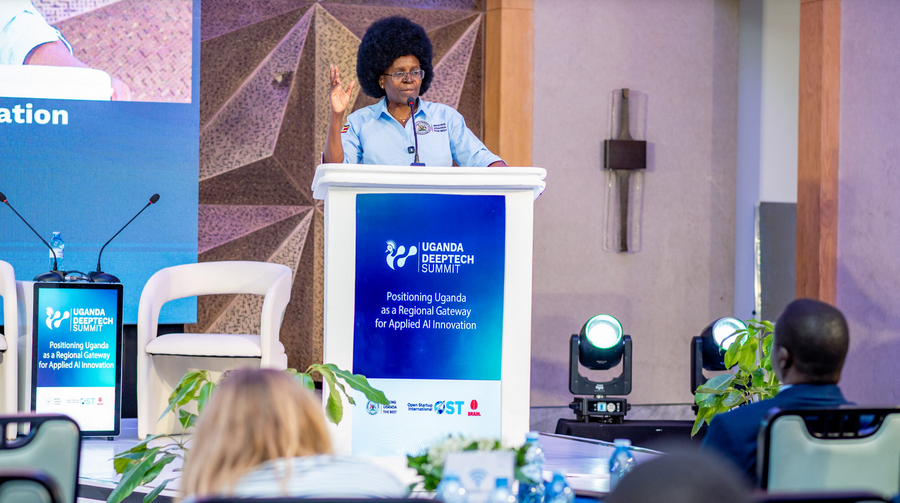
In her address, Dr Monica Musenero Masanza, Minister for Science, Technology and Innovation in the Office of the President of Uganda, emphasized the Summit’s relevance to national planning.
“Uganda is positioning itself not only as a participant in Africa’s innovation story, but as a regional gateway for applied innovation and deep technology development,” she said. “The discussions over these two days will help shape the systems and capabilities our economies will rely on for decades to come. Your perspectives will contribute to the architecture of Uganda’s future economy.”
Beyond technology adoption, the conversation on artificial intelligence is increasingly about capacity-building and the choices institutions make as they prepare students for a changing world of work. Uganda’s 2025 National AI Landscape Assessment identifies a lack of skills as the leading barrier to AI adoption, alongside the absence of AI-focused curricula and limited hands-on training.
The Education Collaborative was invited to contribute to the Education and Talent pillar, drawing on its AI adoption study with the World Innovation Summit for Education and its work with about 500 higher education institutions across Africa. Represented by Executive Director Rose A. Dodd, the Collaborative emphasized the importance of exposure, peer learning, and adaptable models across the continent. Facilitated by Selma Talha Jebril, World Innovation Summit for Education (WISE), panellists include: Elaine Alowo-Matovu, The North Green School / Musizi University, Dr Patrick MUNYENSANGA, African Institute for Mathematical Sciences (AIMS), Doris Wangari, Science for Africa Foundation, Bruno Ssekiwere, Deep Learning Indaba.
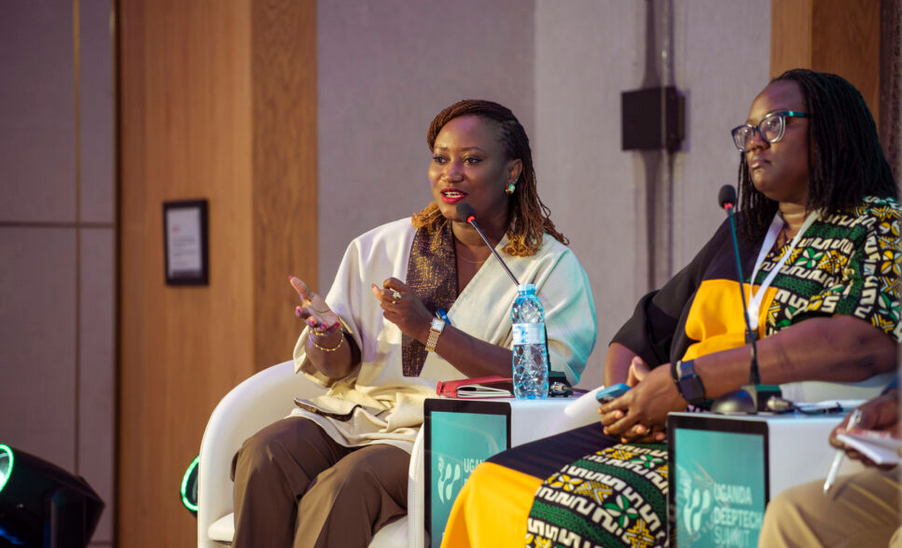
“Faculty exchange across African universities helps educators expand perspective, strengthen practice, and translate ideas more effectively within similar contexts,” Dodd said. “When faculty in Uganda engage with peers in Nairobi, Kigali, Lagos, or Lomé, for instance, they gain a broader understanding of what is possible across different learning environments and student communities.”
Designed as a practical summit for Uganda, the gathering aimed to identify sector priorities for action over the next 12 to 24 months. In her closing reflections, Dodd noted that universities must prepare not only students, but also the educators and staff who guide them.
“Universities must focus not only on curriculum and research infrastructure, but also on preparing faculty and staff to learn and use AI confidently,” she said. “Teaching for, though, and about AI depends on educators who feel equipped to begin.”
She added that institutions can start with a focused diagnostic.
“A first step is to assess where each institution stands, using the AI-enabled digital maturity scorecard from our AI adoption study, identify one priority area, and build momentum from there.”
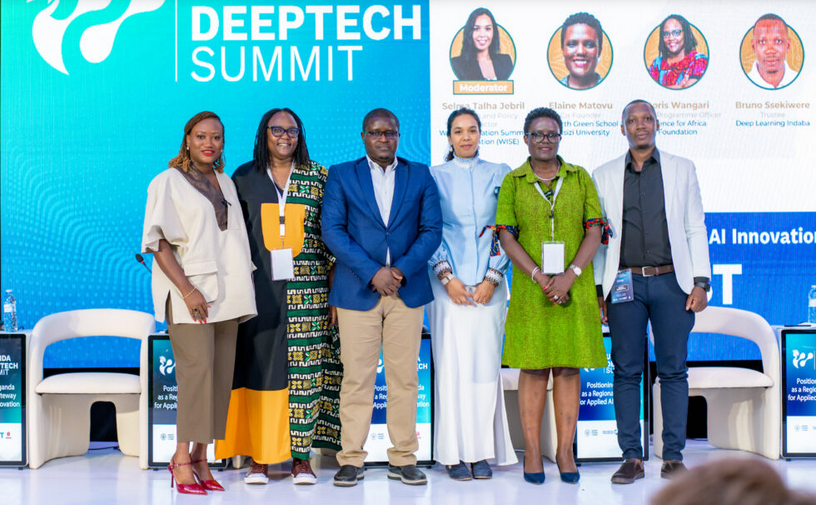
The Education and Talent pillar closed with a shared message: Beyond technological infrastructure, Uganda’s AI future will depend on the systems that prepare people to participate in it. From foundational literacy and teacher training to industry partnerships, research commercialization, and regional collaboration, panelists called for a connected talent pipeline that supports learners from the classroom to the workforce.
Uganda’s young population is an asset to invest in. With stronger education pathways, earlier exposure to applied learning, continued faculty development, and closer collaboration among universities, industry, and policymakers, the country has an opportunity to help shape Africa’s next generation of AI talent and innovation.

This article was originally published by The Education Collaborative and is republished here with permission.
The Education Collaborative is a pan-African network advancing higher education through collaborative research, practice-driven programs, and shared accountability among universities and education leaders, with a focus on strengthening graduate outcomes and long-term institutional impact.