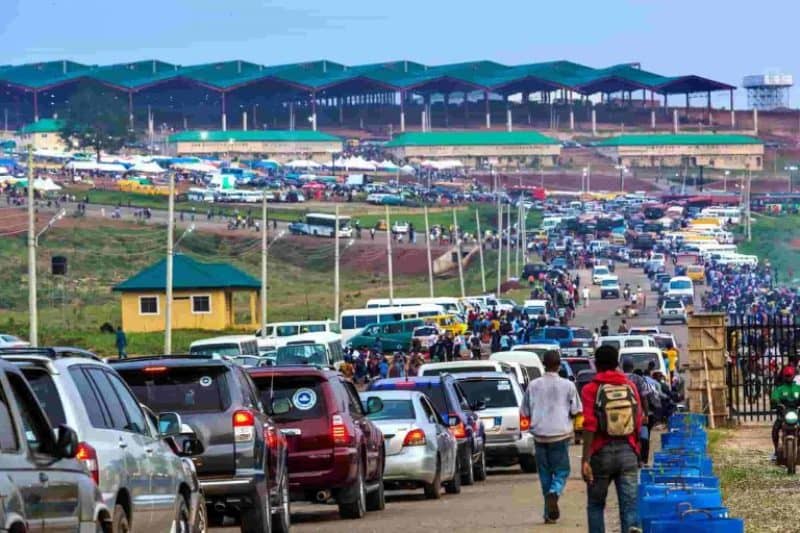
When I walk through my street in the evening or try to beat the traffic at dawn going to work in the city of Lagos, Nigeria, the rapid growth repeatedly spoken of in the media as a statistic becomes a brutal reality that I live. It is estimated that Lagos has nearly doubled over 15 years to 21 million people and it’s said to double, according to some reports, by 2050. Mind-boggling stats, but I can only speak for my street. My street, which is in the lower middle-class area in one of Africa’s megacities, Lagos, has definitely doubled over the past 5 years in terms of economic and social activities and population growth. Okay, we might be going narrow too fast. Let’s get back to the broader society.

Let’s Talk About African Cities
Africa is rapidly urbanizing. Its rate of urbanization soared from 15% in 1960 to 40% in 2010, and is projected to reach 60% by 2050, according to the UN-Habitat, The State of African Cities. This isn’t necessarily bad news. Urbanization is often linked to economic prosperity. It, oftentimes, creates opportunities for economic development and the chance of survival for the poor.

However, the growth in African cities is binary; the African continent is like a coin on its side which can either result in a head or a tail flip. As The World Bank puts it in the overview article for the Urbanization in Africa: Trends, Promises, and Challenges event in 2015, “The continent’s urbanization rate, the highest in the world, can lead to economic growth, transformation, and poverty reduction. Alternatively, it can lead to increased inequality, urban poverty, and the proliferation of slums.” This accurately paints the edge, or the cliff, where Africa has found itself.
While the diversity of African cities hinders easy generalizations, one can still take note of some of the opportunities and challenges of urbanization in these cities. Some of those opportunities and challenges are highlighted in this article.
Opportunity to Accelerate Industrialization and Reduce Poverty Levels

Urbanization is key to economic growth and development. Most major cities usually go through the industrialization stage. African cities can provide access to a large pool of labour, cost-effective access to suppliers, and specialized services to firms, which, as a result, makes these cities attractive to more firms and can also raise the income levels in these cities. These cities can help firms lower transaction costs and create information-sharing opportunities, and create an atmosphere that enables innovation.
These cities have the benefits of providing adequate labour (cities have it easy attracting people with skills), material inputs and premises that match the unique needs of firms. Majority of the population can become engaged in high productivity activities moving away from low-productivity agriculture in the rural area. As a result of all these things, there can be economic growth.
Allowing history to guide us, in the 18th and 19th centuries, urbanization and industrialization propelled Europe and the United States to prominence and spurred economic transformation; it transformed these regions into economic powers. These can be the case for Africa if the rapid growth in these cities is accompanied by the right policies. It’s more like a win-win situation when growth is accompanied by good government policies. It often translates into improved living standards and higher quality of life. Economic dividends from cities can be passed down to rural areas as businesses and individual consumers in the city demand more agricultural products, which, in turn, could reduce poverty in these rural areas.
However, most African cities have jumped this critical industrialization stage needed for economic growth. But, it’s never too late to get it right. Integrating the large population, moving from rural areas into the manufacturing sector rather than the informal services sector can accelerate industrialization, which, in turn, can provide more jobs, raise the standard of living, and yield the badly-needed economic growth for African countries.
New Market Opportunities

African businesses can generate new revenue streams from actively getting involved and creating new business models that can cater to the needs of the increasing city-dwellers. Businesses can address areas of need for city-settlers like health, housing, water supply, energy, connectivity, and education. These infrastructural challenges are immediate needs that need heavy investments across African cities, and governments cannot take on these projects alone — they will need private partnerships. This is where these infrastructural challenges become opportunities for investors. Some investors would even be able to secure first-mover benefits in these new markets.
New markets would not only arise in infrastructural needs. The increasing size of these African cities has economic benefits that would translate into rising income for the consuming class. There will be a growing consumer class that will drive the demand for goods and services. Spending on clothes and other basic necessities will be fueled by low-income households, who will make up the majority of these African cities. Companies will need to understand their target market to take advantage of the population and know that most African cities are filled with ‘young entry-level consumers.’
African cities can lead the digital transformation of Africa. In most cities in Africa, we are seeing entrepreneurs leveraging internet infrastructures to deliver value in a new way to urban dwellers. Easier access to the internet has been a major driver of the e-commerce boom in many Kenyan (and African) cities, triggering an emergence in online retailing. The growth in that market has, in turn, led to the demand for postal services and logistics. Most of these entrepreneurs are benefiting from shared services and infrastructure because of the scale of activity going on in cities.
Opportunities for Social and Cultural Integration

Most African countries are largely divided among ethnocultural and religious lines. Urbanisation is bringing people from different ethnocultural backgrounds and different religious beliefs, who have a common goal of economic pursuits, from rural areas to urban centres, and, in the process of attaining economic pursuits, they learn to live with people of other beliefs. Large cities are mostly places where cultural diversity flourishes. African cities are there to exemplify the cultural, social, and religious diversity that is seen as fundamental characteristics of countries that will develop economically and socially in an era when the global world is interdependent. While on economic pursuit, integration occurs in workplaces, schools, neighbourhoods, streets, shopping malls, and soccer fields.
These African cities are like focal points in these developing countries in which adaptation to new ways, new consumption, new technology and production patterns, as well as new social institutions could be evolved. Historically, cities have been the seats of learning and education; cities have been the centres of governmental and administrative organizations, and they have also performed the function of cultural or religious rallying points. Innovations through partnerships and interdependence of various cultural groups in cities have contributed immensely to improving the quality of life of urban populations and to enhance the critical and catalytic roles of urban centres in rural development and transformation. With sustained urban-rural links, a development pipeline will flow from both sides, thereby making them interdependent in numerous ways.
Even though in some South African cities we have cultural discrimination in the form of xenophobia resulting in violence, these should be seen as early challenges that cities will face in integrating as a result of unequal economic growth. Most South African cities are still very much diverse. Diversity is not sufficient enough to bring sustained inclusion of the different groups that populate a city. Government agencies, social groups, and civil societies have influential roles in shaping social integration.
African cities will continue to play a vital role in creating a socially-inclusive environment as they grow rapidly. They will grow evermore into the focal point of industrial and post-industrial economic growth.
The challenges pose big threats…
Infrastructural Challenges

“We have to be impatient in moving Africa forward,” says Adewunmi Ayodeji Adesina, the President of African Development Bank. Africa needs infrastructure like a lost traveller needs a drink in the middle of hot Sahara. The African Economic Outlook 2016 estimated that, on average, African countries would need to spend 5-7% of the gross domestic product, or a minimum of $100bn a year on public infrastructure.
Going back to my street in my area in Lagos, even though it has more than doubled in economic and social activities and the population has also doubled, the infrastructure has largely remained the same — even become worse in some cases. The road has gradually become worse, and public water supply is totally unavailable. The rapid growth is largely leading to overburdening of infrastructures, leading to low-quality life for most people.
Also, the traffic congestion at peak hours of the day in African cities is a big problem. Traffic congestion worsens with more people moving into these cities.
Let me help you understand this with my experience of going to work in the morning in the city of Lagos. The traffic is mostly at a standstill for hours. It’s not just because there are so many people going to work in the morning, which, of course, is part of the reason, but because of the bad roads in some places. Also, whenever there’s traffic, transport cost is usually doubled. Earlier this year, Nairobi, Kenya was ranked the 2nd worst city in the world on traffic congestion. Traffic in cities is a result of urbanization, and African cities must also react by building better roads and developing a better transport system that can cater to a large number of people already living in these cities and those that would surely move in.
So, what we have is the few infrastructures already in place in health, education, roads, etc., being unable to cater to people currently in most of these cities, and might just lead to utter collapse when more people pour in from rural areas (where most also lack basic infrastructures).
Mario Pezzini, director of the OECD’s Development Centre, said, “It is not possible to separate these issues…What we are really talking about is how do you create conditions and services, not only to provide a better quality of life, which is crucial, but also to create opportunities for economic development…If you don’t create infrastructure, the jobs will not be there.”
Crime and Security Challenges

Talking about jobs – Security definitely goes hand-in-hand with infrastructure. Without adequate infrastructures, you have a problem with security. Infrastructure and security determine productivity. Research has it that there are many young city dwellers. It says more than half of Africa’s population are under the age of 18, and 19% are between the ages of 15 and 24 years old. Without infrastructure, there can’t be jobs for these vibrant youths, and without jobs, there would likely be a rise in crime and other nefarious activities.
We all know who makes work for idle hands. For those who don’t, it’s the devil. The Arab Spring in North African cities, the xenophobia in South Africa, and the cases of kidnapping in major cities in Nigeria earlier this year are some of the results of population growth that has been met with lack of jobs. Many of the youth in these cities are plugged into social media and know what they are missing out on. These things will lead to restlessness and would result in higher crime rates. From rape and kidnapping to robbery cases in African cities, these are expected to continually rise if the growth in these cities doesn’t commensurate with economic growth.
Some of the cities with the highest crime rate include: Rustenburg City with 11,117 cases in 2015, according to Crime Statistics South Africa (crimes included household burglary, kidnapping, hijacking, and political violence). In Pietermaritzburg, the crime rate has been on the increase year-on-year. According to Crime Statistics South Africa, in 2013 there were 13,596 cases, which rose to 14,794 cases in 2014, while in 2015, there were 15,720 cases.
Some of the other African cities with high crime rates are Benghazi, Libya; Johannesburg, Cape Town, Port Elizabeth and Durban in South Africa; Lagos, Nigeria (Street gangs dubbed “area boys” cause a lot of problems, while Lagos is also an internet scam hotbed – cyber criminals prey on innocent foreigners); Luanda, Angola (according to the UK Government service Gov.UK, crimes in the city include carjackings, assaults, homicides, muggings for valuables like mobile phones, armed robberies, and rape incidences both in nightlife areas and private homes; Nairobi, Kenya (the US Overseas Security Advisory Council (OSAC) rates Nairobi’s crime levels as being “critical”).
Also, the security systems in most African cities are not so sophisticated to cater to the large population. This means rapid growth in some of these African cities is only creating more criminals and endangered lives.
The future of African cities is binary as clearly seen from the opportunities and challenges highlighted. If African leaders remain headstrong in poor decisionmaking, they would simply ratchet up the problems plaguing African cities today and totally wipe out the advantages that could have been obtained from the growth in these cities. With quality leadership, with good vision, we can develop a blueprint on how to achieve the potentials of the rapid growth occurring in African cities. Africa is definitely at a tipping point; the coin is on its side and about to fall, but African leaders have the real chance to decide which side of this coin shows up.