As an expat—an outsider by definition–there is a sense of safety when we speak of Lagos or Nigeria in general. In a way, we feel safe to criticize and condemn what we encounter. We feel no ownership of this place and so without apology, we speak of the things that frustrate us in our lives here. There is no nationalistic sentimentality, no Nigerian pride that halts us when we speak our mind. No thought to the Motherland that birthed generations living here before us. No acknowledgment of the steps achieved despite the struggle. We are neutral enough to openly state the observations that we witness, and lofty enough not to care. To freely speak about the lack of power and the plenty of corruption. To boast that our context and exposure and learning allow us to be qualified critics when we judge Nigeria.

I have also been known to rationalize my contempt, “I also come from an oil-rich nation…” I may have said at some points.
And yet, even that distancing and freedom to speak grows discomforting. For on a trip out of Nigeria over a year ago, I was asked by friends about my experience so far, and like a cheap, novice comedian going in for the easy laugh, I lambasted the country I now call home. “It’s oppressively hot, there is nothing to do, family life is tough, and it is so expensive; there is nothing to do,” I said. “It’s so hot, things never work, things that do are piecemeal, there are no gorgeous parks, things are expensive, the maids are difficult to manage; it’s hot. There is never any electricity, it’s dirty and ugly, something always needs to be fixed, it’s so expensive, Lagosians are aggressive, the traffic is unpredictable and draining, police are blatantly corrupt, wealth is so uneven…” and on and on and on I rambled.
And then like the junior carnival worker drumming up a round of applause and the attention-seeking poor-me-one begging for looks of sympathy for her suffering, instead I got eyes glazed over in boredom and they unearthed deep shame. I felt disgusted with myself. Describing Nigeria and Lagos in particular as such an unworthy place to live started to feel strange to me. I felt as though I was betraying something special and sacred; that in a weird way I was being ironic. It stopped being interesting or funny and so I stopped myself and began to unpack my own increasing discomfort with bashing this city. Why was I not fully at ease with speaking the plain facts? Why was I beginning to feel like a betrayer, like a traitor?
I tuned in very carefully to the critics of the country, listening to what they were saying. And the lights started coming on in my head when I realized that the pundits and the politicians, the social workers, and my fellow soccer moms were in fact describing me. I am Nigeria. The lights were coming on not to illuminate, but to reveal the areas in my life and journey—not as a nation, obviously—but as a human being where I felt inadequate. The introspection revealed the areas in my life that should have long ago developed into a lovely city park or a sophisticated power plant, not been left abandoned and overgrown. On a human level, I began to relate to Nigeria. And so the tactful attacks no longer felt distanced from me. They felt personal.
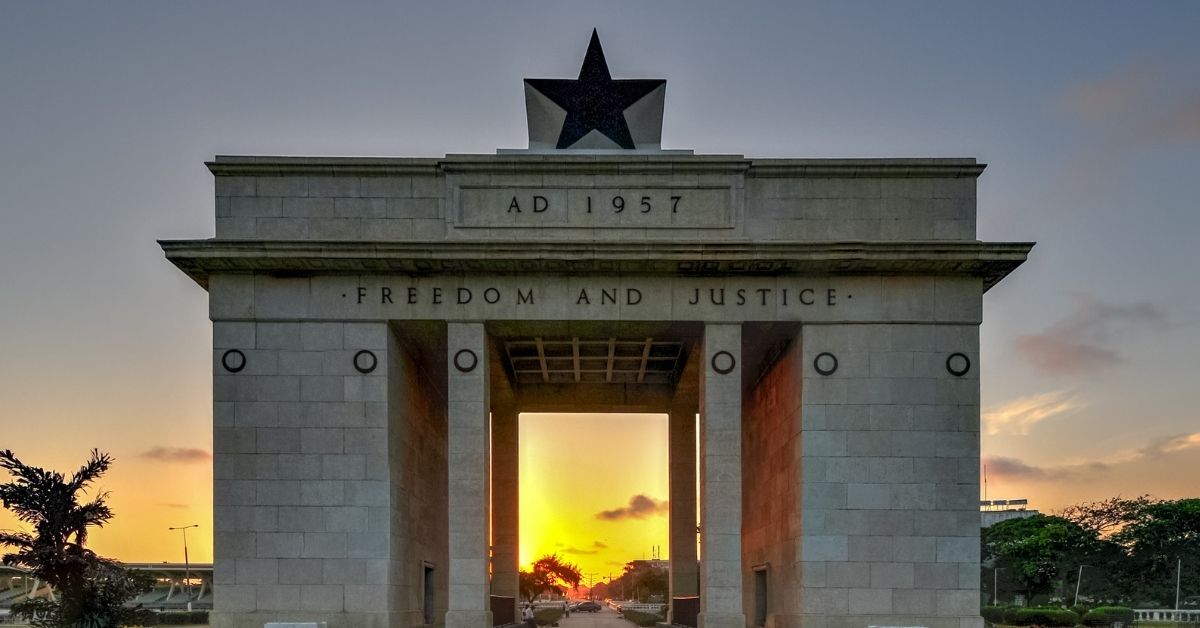
When privileged women around me rolled their eyes in disgust, fretting that Lagos is such a difficult place to live, I think of my husband who after a long day of work comes home to a most inhospitable wife. I am also often a difficult place to live. And when I hear them say that Ghana is so much more advanced, asking why can’t Nigeria be more like Ghana, I think of my friends, the doctors, lawyers, and the engineers, and I wonder how many people are asking the same question about me: “Wow, she had so much potential; what is she doing with her life?”
Indeed, there is no shortage of asking myself, “Why couldn’t I be more like her?” My resources that should often be spent for school and health, I may chip at to spend on something else. I struggle with my own version of corruption: I am selfish by nature and it’s impossible for me to forgive. I am inexcusably underdeveloped in many ways.
When I hear the repeating old refrain about Lagos, I willingly put myself in the line of attack, and the action—what my former Philosophy of Race and Gender professor will call solidarity—causes a different kind of reaction. I no longer enjoy the naysaying and the hopelessness of criticizing Nigeria. How can I join in on a song sung about me? Instead, it prickles my skin and rather than a dumb nodding of the head in blanket agreement, I am slowly learning to defend this nation not because I reside here, but because that same slow, long path to progress resides in me. Not to excuse it, but to offer hope in the minds of those who sentence it. Much like I would like to be treated if I stood in a circle of critics. How lovely to have one voice chime, “Her journey is not complete.”
I will never be Nigerian. Somewhere along the line, I am African, but I cannot claim the pride or the derision of this country. I am an expat here and I could stay safely and comfortably away. I have every right. But rather, I chose to see its journey as a symbolic reflection of my own flawed and painstaking journey. I will defend this country for its promise, not because I am so compassionate and generous, but because it is the way I would want to be treated. I will also not make excuses for Nigeria and will not whitewash troubling patterns, for that is lazy. I make no excuses for myself. And finally, I will celebrate this country as there is so much to celebrate! The color, and beauty, and passion, and creativity, and entrepreneurship; the hope and the pride. And to be honest, also the aggression—there is a good kind!
Those are the things that Nigeria is teaching me to find in myself. It is showing me that even the starkest landscape can have such dazzling elements. Oh Nigeria! You and I. We have lots in common, potential that has not been maximized. We are full of possibility and wasted opportunity. We are both way behind our peers. But I also believe that I have something else in common with Nigeria: we are both on the brink of something great.
Nigeria and Myself: On the Brink of Something Great
Posted by Joanna Boer on October 16, 2012 at 7:55 pmAs an expat—an outsider by definition–there is a sense of safety when we speak of Lagos or Nigeria in general. In a way, we feel safe to criticize and condemn what we encounter. We feel no ownership of this place and so without apology, we speak of the things that frustrate us in our lives here. There is no nationalistic sentimentality, no Nigerian pride that halts us when we speak our mind. No thought to the Motherland that birthed generations living here before us. No acknowledgment of the steps achieved despite the struggle. We are neutral enough to openly state the observations that we witness, and lofty enough not to care. To freely speak about the lack of power and the plenty of corruption. To boast that our context and exposure and learning allow us to be qualified critics when we judge Nigeria.
I have also been known to rationalize my contempt, “I also come from an oil-rich nation…” I may have said at some points.
And yet, even that distancing and freedom to speak grows discomforting. For on a trip out of Nigeria over a year ago, I was asked by friends about my experience so far, and like a cheap, novice comedian going in for the easy laugh, I lambasted the country I now call home. “It’s oppressively hot, there is nothing to do, family life is tough, and it is so expensive; there is nothing to do,” I said. “It’s so hot, things never work, things that do are piecemeal, there are no gorgeous parks, things are expensive, the maids are difficult to manage; it’s hot. There is never any electricity, it’s dirty and ugly, something always needs to be fixed, it’s so expensive, Lagosians are aggressive, the traffic is unpredictable and draining, police are blatantly corrupt, wealth is so uneven…” and on and on and on I rambled.
And then like the junior carnival worker drumming up a round of applause and the attention-seeking poor-me-one begging for looks of sympathy for her suffering, instead I got eyes glazed over in boredom and they unearthed deep shame. I felt disgusted with myself. Describing Nigeria and Lagos in particular as such an unworthy place to live started to feel strange to me. I felt as though I was betraying something special and sacred; that in a weird way I was being ironic. It stopped being interesting or funny and so I stopped myself and began to unpack my own increasing discomfort with bashing this city. Why was I not fully at ease with speaking the plain facts? Why was I beginning to feel like a betrayer, like a traitor?
I tuned in very carefully to the critics of the country, listening to what they were saying. And the lights started coming on in my head when I realized that the pundits and the politicians, the social workers, and my fellow soccer moms were in fact describing me. I am Nigeria. The lights were coming on not to illuminate, but to reveal the areas in my life and journey—not as a nation, obviously—but as a human being where I felt inadequate. The introspection revealed the areas in my life that should have long ago developed into a lovely city park or a sophisticated power plant, not been left abandoned and overgrown. On a human level, I began to relate to Nigeria. And so the tactful attacks no longer felt distanced from me. They felt personal.
When privileged women around me rolled their eyes in disgust, fretting that Lagos is such a difficult place to live, I think of my husband who after a long day of work comes home to a most inhospitable wife. I am also often a difficult place to live. And when I hear them say that Ghana is so much more advanced, asking why can’t Nigeria be more like Ghana, I think of my friends, the doctors, lawyers, and the engineers, and I wonder how many people are asking the same question about me: “Wow, she had so much potential; what is she doing with her life?”
Indeed, there is no shortage of asking myself, “Why couldn’t I be more like her?” My resources that should often be spent for school and health, I may chip at to spend on something else. I struggle with my own version of corruption: I am selfish by nature and it’s impossible for me to forgive. I am inexcusably underdeveloped in many ways.
When I hear the repeating old refrain about Lagos, I willingly put myself in the line of attack, and the action—what my former Philosophy of Race and Gender professor will call solidarity—causes a different kind of reaction. I no longer enjoy the naysaying and the hopelessness of criticizing Nigeria. How can I join in on a song sung about me? Instead, it prickles my skin and rather than a dumb nodding of the head in blanket agreement, I am slowly learning to defend this nation not because I reside here, but because that same slow, long path to progress resides in me. Not to excuse it, but to offer hope in the minds of those who sentence it. Much like I would like to be treated if I stood in a circle of critics. How lovely to have one voice chime, “Her journey is not complete.”
I will never be Nigerian. Somewhere along the line, I am African, but I cannot claim the pride or the derision of this country. I am an expat here and I could stay safely and comfortably away. I have every right. But rather, I chose to see its journey as a symbolic reflection of my own flawed and painstaking journey. I will defend this country for its promise, not because I am so compassionate and generous, but because it is the way I would want to be treated. I will also not make excuses for Nigeria and will not whitewash troubling patterns, for that is lazy. I make no excuses for myself. And finally, I will celebrate this country as there is so much to celebrate! The color, and beauty, and passion, and creativity, and entrepreneurship; the hope and the pride. And to be honest, also the aggression—there is a good kind!
Those are the things that Nigeria is teaching me to find in myself. It is showing me that even the starkest landscape can have such dazzling elements. Oh Nigeria! You and I. We have lots in common, potential that has not been maximized. We are full of possibility and wasted opportunity. We are both way behind our peers. But I also believe that I have something else in common with Nigeria: we are both on the brink of something great.