Travel

Discovering Rwanda: A Visit From the Heart

In mid-2009, our middle son, Russell, learned that he had been accepted in the Peace Corps and would begin a 27-month teaching stint in Rwanda. As our knowledge of the country was limited to the movie “Hotel Rwanda” and a few memories of the genocide tragedy of 1994, my wife, Mary, and I took a deep breath and began reading what we could find about our son’s future home. After reading many books and articles, we resolved to visit him. In the summer of 2010, we spent 10 days in what’s known as the “Land of a Thousand Hills.” We left awed by the beauty of the country and touched by the people we met.

Our trip started in Kigali. Mary had (wisely) decided we should have a driver for the visit. We quickly learned that Gerry would not only be helpful as a driver and translator, but his prowess as a cultural interpreter proved invaluable. (Photo of the author with friends, by Jay Owen)

Gerry is a native of Rwanda. He has also spent time outside the country, including three years in the States, and fortunately for us, he spoke “American English” (most Rwandans learn British English). He told us once the most disconcerting part of living in the States was being alone: no one knew or cared about where he was and what he did. I thought that odd until he explained that in Rwanda, your business is everyone’s business and to not know about your neighbor is rude. We saw that in action as we had many visitors who wanted to meet “Russell’s parents.” News of our visit had preceded us. This was one of many times he tactfully guided us in our host country.

Gerry has a story like many Rwandans. Had he been in country during the genocide, he would most likely have not survived. He was in Kenya at the time. One day he called and spoke with his parents; the next day, he called and didn’t get an answer. He knew that they and others in his family were gone. However, he does not lead life looking backward. I never asked him, but I suspect that he sees the challenges ahead for Rwanda, and that he firmly believes the future can be better and that success will be borne, in large measure, upon the personal efforts of its people.

Our first stop took us from Kigali to Akagera, a game preserve in the eastern region of the country. The main east-west road is paved but that’s about it. For most of the trip we saw few cars but lots of people, many walking with the ubiquitous yellow jugs to carry water. That was to become a very familiar sight.

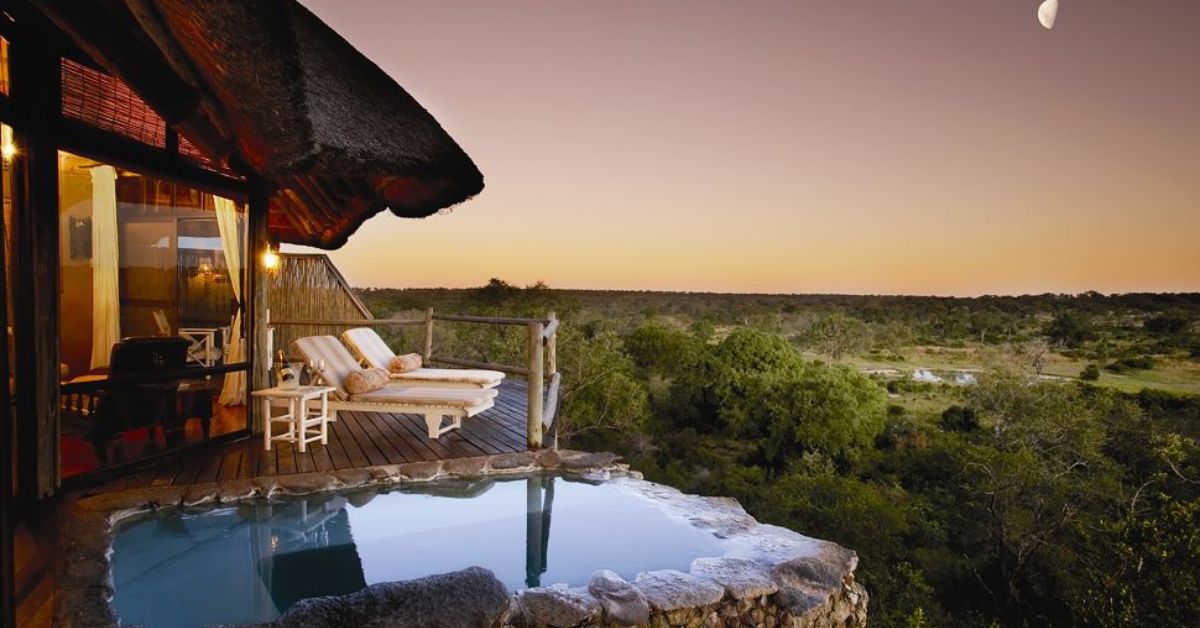
We wanted to see Akagera because we knew Russell would have little time to visit this part of the country. It also offered great service and very comfortable accommodations, much like Kigali. Since it is not a major destination among African safaris, the lodge was virtually vacant. We enjoyed seeing zebras, giraffes, water buffaloes, and hippopotamuses in the wild.

From Akagera, we drove across the country to the western border on Lake Kivu, where Russell lives. We were to spend the next four nights in our son’s village, staying in a guest house that he rents from a family led by a woman named Agnesta. It was cultural immersion at its finest.

Our first night, we spent exchanging gifts and playing games with Agnesta and her family. She is a single mother of a son and daughter who had taken in two other girls at the time we were there. Since English was not widely spoken, we had to figure out a way to interact that transcended language. A simple card game called “spoons” (suggested by Mary) eventually served as the trick. We immediately made new friends.

Over the next four days we met many locals, attended a church service, went to plenty of dinners, and did some exploring. Mary, an occupational therapist, even provided services in a local hospital. Collectively, the people were very engaging. The scenery was beautiful, muting the underlying poverty of the living conditions that we saw. (Photo of Lake Kivu by Jay Owen)

Many stories we heard were inspirational. One young man in particular, Danny, made an impression that we will not ever forget. Danny is a bright young man. His father is deceased and his mother has AIDS, an all too common occurrence. He has an older brother, but he is responsible for taking care of his mother. His grades belie his intelligence, as he has to find small jobs after school to buy food for himself and his mother. When we met, he was telling me of his ambitions to get an education and pursue some kind of professional vocation. He also told me of his short-term plan to start a flock of laying hens to make an income. The day we were returning to Kigali for our flight home (about a four-hour ride), Danny arrived and presented us with six eggs, telling us, “I know the trip is long and I wouldn’t want you to get hungry.” I can only imagine that this represented a couple of days of income for him. We accepted the eggs. I would say, though, that Danny gave me an even bigger gift: a tangible example that one can make a difference in someone else’s life, no matter how much or how little they possess. Genuine kindness truly knows no boundaries.

I can say much more about our trip. I had an incredible opportunity to speak at a Sunday morning church service, as well as at a smaller church gathering midweek. We spent lots of time getting to know Agnesta, her family, and Russell’s many friends. Lives now intertwined, we trust that the relationships forged and lessons learned will flourish, despite the miles.

Jay Owen is a research director at a major U.S.-based semiconductor company. His volunteering includes enabling education for at-risk children, particularly in homeless shelters. He continues to look for opportunities to reach out to those he met in Rwanda.

Tags: