africa

Search Africa.com

Africa.com Blog

twitter facebook Africa.com's RSS Feed
Education
Wednesday, August 04, 2010

Why Educate A Girl?

by Camfed They were important stories, and they needed to be told - but in telling them, I began to forget that tragedies come in quieter tones as well.

I was reminded of these quiet tragedies the first time I visited Zambia and met 15-year-old Febby. At age ten, Febby lost her father, the sole breadwinner in her family of seven. Her mother sold off everything they owned in order to start a small business selling cassava so she could feed her children. Sending them to school was far beyond her means.

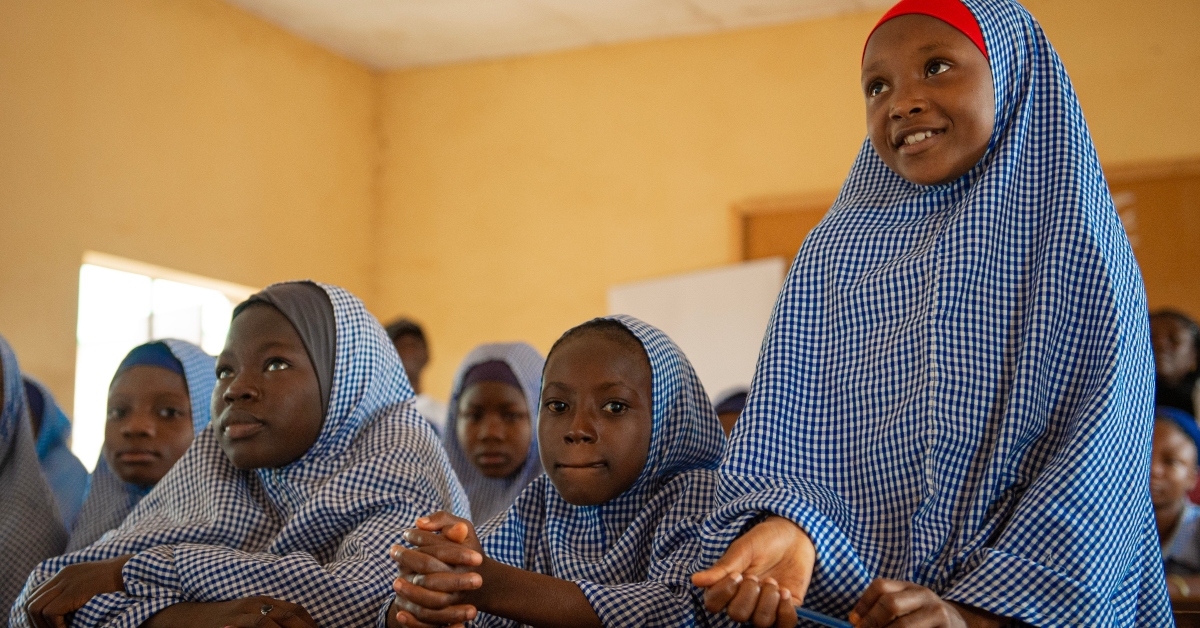
So Febby dropped out of school, joining the ranks of the 24 million girls in Africa who cannot attend school – a story so common it is at risk of seeming banal.

Febby stayed out of school for two years, helping her mother with house chores. When I met her last year, she described to me the despair she felt during the two years that she was unable to attend classes. “I used to sit by the window and watch the other children going back and forth to school in their uniforms,” she said. “It was very painful. I used to think to myself, I am going to grow up ignorant. I am going to grow up illiterate.”

I heard similar sentiments from a young Zambian woman named Penelope, who lost both parents by the time she was eight, and left school to help support her siblings at age 12. Like Febby, she recalls watching other children en route to school, and grieving for her lost future. “I knew a lot of young women who had dropped out of school due to poverty, and I knew how they struggled,” she told me. “Some of them wound up getting married young and having a lot of children. Some of them became prostitutes and eventually died of AIDS. I knew that you cannot escape poverty without going to school. I envisioned a Penelope who was trapped in this poverty forever – a Penelope who would never stop suffering.”

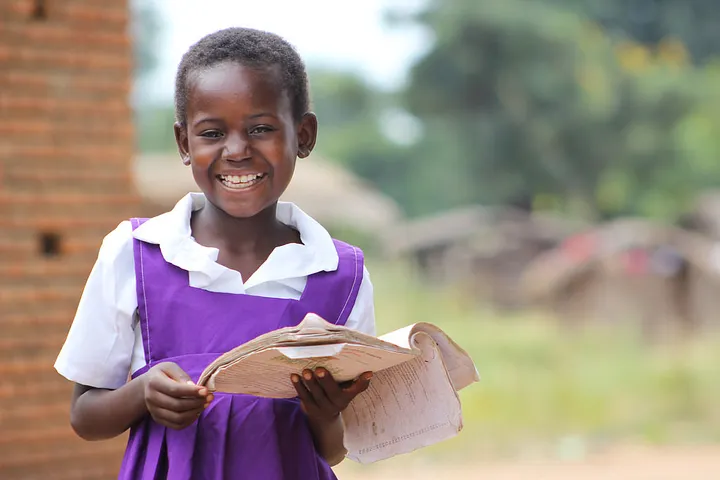
Thankfully, neither Febby nor Penelope is still living with that sense of utter hopelessness. With Camfed’s support, they were able to return to school. When I met Febby, she was sitting in a classroom dressed in a sharp blue school uniform and red tie. She talked with great excitement about her fascination with science and her plans to become a nurse, and I was struck by her keen intelligence, her charm, and her mischievous sense of humor.

As for Penelope, she graduated high school and went on for IT training through the 10,000 Women Program – and since then the whole staff at Camfed has watched, with tremendous joy and admiration, as she emerges as a leader in her community and on the world stage.

Today, at 22, Penelope manages an IT center, where she is working to close the digital divide in her rural community by introducing hundreds of young people to computers. She and her colleague Fatuma, also a young woman in a field dominated by men, are regularly consulted for their technical expertise by educators and government officials.

Penelope and a group of other young Zambian women filmmakers have made a film about Penelope’s childhood struggles, and her story has been watched by thousands of people in 81 countries. For her courage in speaking out, Penelope received the Fortune Magazine/Goldman Sachs Global Women Leaders Award last year, which she is using to make a film about the problem of domestic violence in her community.

This past May, Penelope was invited to deliver a keynote address on education at the World Economic Forum in Dar es Salaam, and I had the honor of working with her. As I watched her practice her speech, a remarkably poised young woman with so much wisdom and heart to offer the world, an image flashed through my head. I saw a young Penelope sitting idle by a window, yearning for a way out - a girl whose voice would never be heard, and whose gifts would never be developed. And I realized, with striking clarity, what that girl, and the world, stand to lose if we allow ourselves to think of that story as anything less than a tragedy.


Camfed (The Campaign for Female Eduation): Since 1993, Camfed has fought poverty and AIDS by educating girls and empowering young women. More than 1,065,710 children in impoverished areas of Zimbabwe, Zambia, Tanzania, Ghana and Malawi have benefited from our innovative education programs.

Kimberley Sevcik is Camfed’s Information & Media Relations Manager.  Prior to joining the nonprofit sector, she was an award-winning social issues journalist. She is the author of Angels in Africa (Vendome Press), which profiles seven African women who are dramatically transforming their communities; a former contributing editor on international women's issues for Marie Claire; and a former contributing writer for Rolling Stone. She has also written for the New York Times Magazine, Salon.com, Mother Jones, the London Sunday Times Magazine, and Glamour. 


BLOG ARCHIVE


BLOG CATEGORIES

Sign up and tell us if you agree with the author's point of view. Don't have an account? Register for free!