Social Enterprise & Philanthropy
Thursday, December 08, 2011The Millennium Development Goals: An Interview with John McArthur
by Wilmot Allen
John McArthur was the deputy director and manager of the United Nations' Millennium Project from 2002 to 2006. Until recently, he was C.E.O. of Millennium Promise, the leading international non-governmental organization dedicated to supporting the achievement of the Millennium Development Goals. He is also a faculty member at Columbia University’s School of International and Public Affairs. What follows is an interview about how the Millenium Development Goals have helped Africa.As it relates to Africa, has much progress been made in reducing poverty since the MDGs were announced?
Although sub-Saharan Africa has generally seen less rapid MDG progress than other developing regions, there are huge variations across the continent and Africa has also experienced tremendous progress since the Goals were set in 2000. Some of the greatest breakthroughs have been in the scale-up of primary education and health, the latter including pioneering efforts against HIV/AIDS, malaria, and other infectious diseases. Economic growth has also been robust for several years, and some countries like Ghana have seen huge reductions in income poverty (usually measured by living on less than $1/day). For more details, read the U.N.’s latest report on MDG progress.
What models are working and why?
The MDGs synthesize many different issues ranging from hunger to gender equality to the environment to disease control, so there are multiple successful models tackling each of the issues at a variety of scales. At the big picture policy level we see that transparent, goal-oriented, peer-reviewed institutions are highly successful. For example, the Global Fund to Fight AIDS, TB and Malaria and the U.S. Presidential Emergency Program for AIDS Relief have both made historic contributions to advancing basic health across Africa. A powerful combination comes together when there is an integrated focus on using known technologies to reach ambitious numbers of people at an adequate budget per person served.
Tell us more about the work of Millennium Promise and the Millennium Villages project that your organization sponsors?
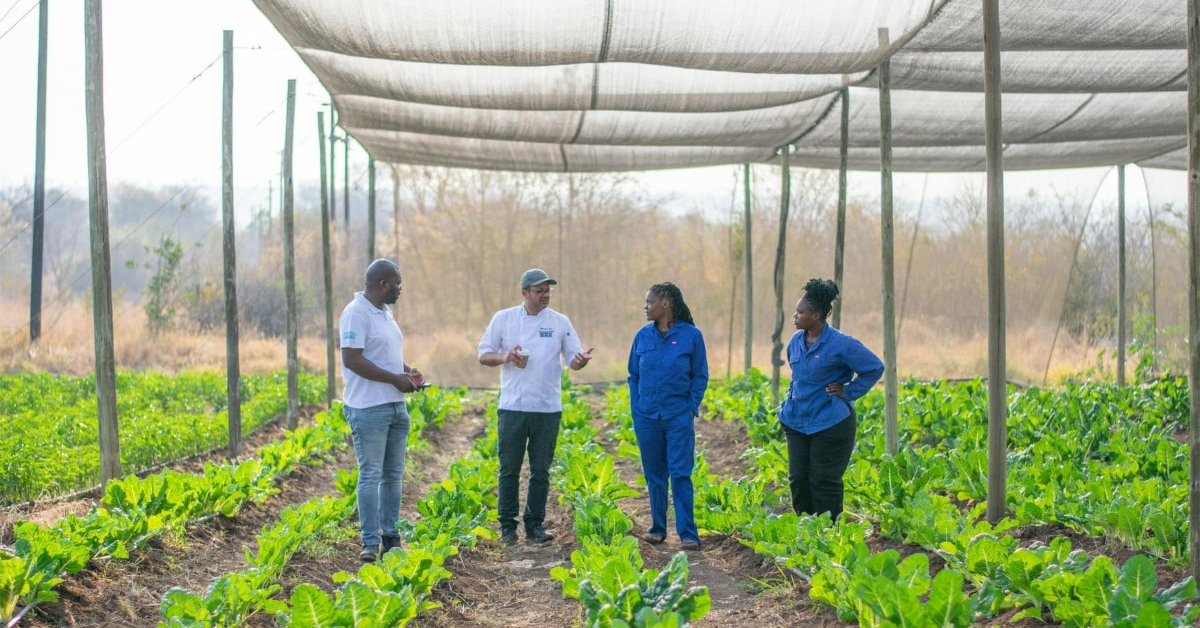
The Millennium Villages Project is Millennium Promise’s flagship effort and a partnership with the Earth Institute at Columbia University. Through collaboration with a broad range of companies, African governments, U.N. agencies, and local partners on the ground, the project aims to show how impoverished rural African communities can be supported to achieve the MDGs in an integrated, time-bound and low-cost manner across a dozen farm systems. Today the project works directly with approximately half a million people across a dozen countries, and also works indirectly with an array of policymakers to support the broader scale-up of the project’s lessons. A recent report on the project’s first five years and plans for the second five years is available here: http://report.millenniumvillages.org/
Many organizations are engaged around the MDGs. Have you noticed much collaboration, such as private/public partnerships?
One of the most rewarding elements of working in this field has been to watch the growing collaboration between public, private and non-profit actors. Businesses often bring key technology innovations and systems that can help solve MDG-related problems. Non-governmental organizations often have strong community-based delivery systems and independent assessments that can help inform broader system solutions. And governments have responsibility for tackling population-wide issues, for leveraging skills and tools from outside government, and for mobilizing the public financing required to bring solutions to scale. I see more of these collaborations in the health field than anywhere else so far, but I think the seeds of collaboration are taking shape in broader communities, and will play an ever-greater role moving forward.
Your organization has engaged the World Economic Forum on achieving the MDGs. What is this partnership and how is it helping to reduce poverty?
Millennium Promise works with and alongside many partners to support the achievement of the MDGs. One component of this has been through the group of Young Global Leaders that the World Economic Forum convenes, bringing together amazing people from science, academia, government, non-profits and the business world. The group and its members launched an initiative we now call MDG Pledges. The basic idea is that the MDGs won’t be achieved through governments alone, so more than 60 of us made our own concrete, time-bound pledges in support of the MDGs, hoping that we might help motivate others to make their own pledges too. Anyone can go to the website to check out the pledges to date, and hopefully to make their own!
How successful are MDG efforts in facilitating government ownership of the development goals in the host countries?
There is certainly a full spectrum of government types and experiences around the world, ranging from those that are extremely committed to reducing poverty in their countries to those that still clearly fail to pursue development priorities. For the more ambitious governments, the Goals have helped to provide an objective framework for establishing priorities in collaboration with international partners. For the more problematic governments, the Goals have frequently been useful in helping to motivate better public investments and actions. After all the strain the world has been through over the decade since the Goals were established, it is a historic achievement on its own that governments and citizens around the global continue to track MDG progress as a core metric of success. In a world where international cooperation feels ever more fragile, the Goals are an important reminder of humanity’s common purpose.


RSS